The Bund (Waitan)
TEA HOUSE SCAM HOTSPOT! If friendly local students or young couples approach you asking to practice English, take their photo, and invite you for tea or coffee, it is 100% an extortion scam. Walk away immediately.
Taxi & Street Navigation Help
师傅,请带我去【外滩】(黄浦区中山东一路)。请在方便临时停车的位置停靠,谢谢!
Opening Hours & Best Time
Open 24/7 (Decorative lights on 19:00 - 23:00 in summer, 18:00 - 22:00 in winter)
💡 Pro Tip: Walk northwards from Shiliupu Wharf toward Waibaidu Bridge to avoid peak pedestrian bottlenecks. Take the ¥2 public commuter ferry (Jinling East Rd to Dongchang Rd) for the cheapest and most authentic river panorama.
Accessibility & Luggage Lockers
Accessibility: ♿ Wheelchair & Stroller Friendly
Completely flat elevated pedestrian promenade. Wheelchair accessible ramps at major crosswalk intersections. Accessible restrooms available every 200 meters.
🧳 Luggage Storage: Self-service luggage lockers available inside East Nanjing Rd Metro Station (Line 10, ~¥2/hr) and commercial storage hub 50m from Exit 5 (~¥20/day).
Nearby Iconic Landmarks & Walking Connections
Easily combine your itinerary with these neighboring architectural landmarks and cultural points of interest:
Skip On-Site Ticket Lines
Reserve verified instant mobile e-tickets using global Visa/Mastercard.
About The Bund (Waitan)
1. Historical Origins: From Muddy Towpath to the “Wall Street of the Orient”
Before the mid-19th century, this legendary riverfront strip was little more than a desolate, waterlogged towpath where boatmen hauled wooden sampans and barges up the Huangpu River. In Chinese, the word Waitan (外滩) literally translates to “Outer Beach”, reflecting its humble marshland beginnings outside the old walled citadel.
Following the Treaty of Nanking in 1842, Shanghai opened as a treaty port. British, French, and American commercial enterprises quickly realized that this prime deep-water river bend was the gateway to the colossal Yangtze River basin. Over the next eight decades, global financial dynasties—including HSBC, Standard Chartered, and the legendary merchant houses of Jardine Matheson and Sassoon—transformed this riverfront into the financial beating heart of Asia, commonly celebrated as “The Wall Street of the Orient”.
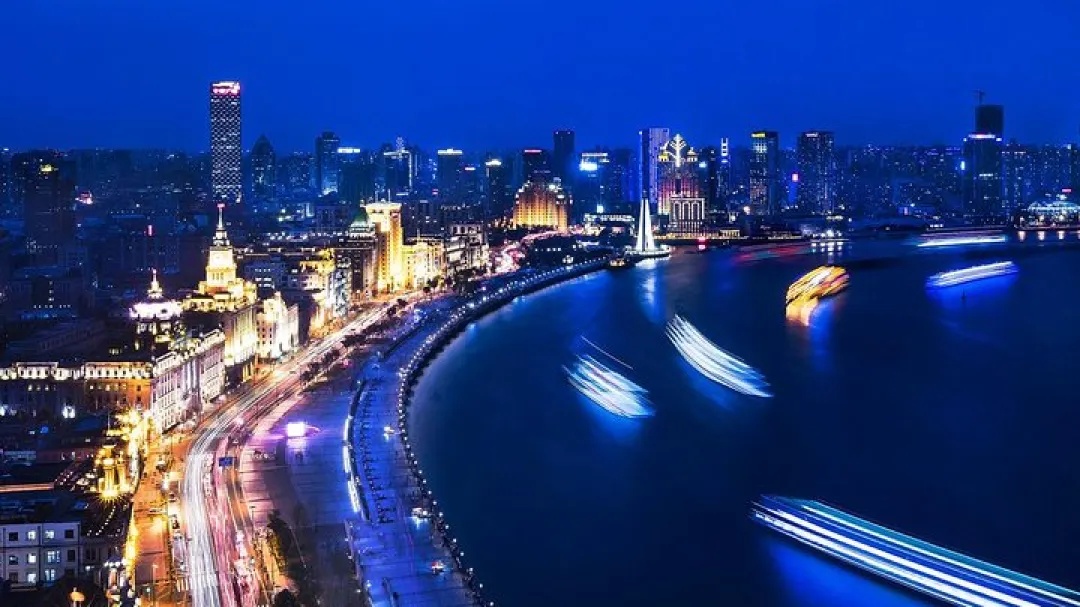
Today, The Bund is revered as a living open-air museum: a magnificent stretch of 52 heritage architectural monuments showcasing Art Deco, Romanesque Revival, Neo-Grec, Gothic, and Baroque grandeur—now standing in theatrical dialogue with the cybernetic neon towers of Pudong directly across the water.
2. Iconic Architectural Legends & Stories to Spot
🏛️ The Peace Hotel (Sassoon House, No. 20)
- The Story: Completed in 1929 by Sir Victor Sassoon, a charismatic British-Jewish real estate mogul. Sassoon had a permanent rivalry with the adjacent Bank of China; when the Bank of China began constructing its headquarters next door, Sassoon used his political sway in the Municipal Council to restrict their building’s height, ensuring his own green pyramid copper roof remained the highest point on The Bund.
- What to Look For: The distinct 19-meter-high weathered green copper pyramid. Step into the ground-floor rotunda to admire authentic 1930s Lalique crystal glass reliefs and listen to the world-famous Old Jazz Band in the evening.
🕰️ The Customs House & “Big Ching” (No. 13)
- The Story: Erected in 1927, this monumental Greek Revival edifice features a towering 79-meter clock tower modeled directly on Big Ben in London. The clock mechanism was built in England and shipped to Shanghai. Historically, its bells chimed the Westminster Quarters (“Big Ching”); in 1966 during the cultural shifts, the melody was permanently reprogrammed to play the patriotic Chinese melody “The East Is Red” (东方红).
- What to Look For: Stand on the promenade at the top of the hour to hear the deep chime reverberating across both sides of the river.
🦁 The HSBC Building (No. 12)
- The Story: When inaugurated in 1923, it was christened “The most luxurious building between the Suez Canal and the Bering Strait”. British architects incorporated over 21,000 square meters of Italian Carrara marble.
- The Legend of the Hidden Mosaics: The central dome was adorned with eight magnificent Venetian glass mosaics depicting the major financial trading capitals of the British Empire (London, New York, Paris, Tokyo, etc.). During the 1960s, mindful museum conservators cleverly painted white plaster over the delicate frescoes to disguise them from being destroyed, successfully preserving these priceless artworks undiscovered until renovations in 1997.
🌉 Waibaidu Bridge (The Garden Bridge)
- The Meaning Behind the Name: Constructed in 1907 at the confluence of Suzhou Creek and the Huangpu River, this was China’s first all-steel truss bridge. In Shanghainese dialect, “Baidu” (白渡) translates directly to “Crossing for Free”. Earlier wooden toll bridges charged locals a fee to cross; when the Municipal Council built this public steel crossing without a toll, overjoyed locals affectionately christened it “Waibaidu”—literally, “The Outer Free Ferry Bridge”.
3. Cultural Contrast: The Tale of Two Epochs
Stand at the centerline of the elevated viewing promenade:
- Gaze West: You are gazing into the 1920s—solid, unyielding stone colonnades, brass railings, granite gargoyles, and the dignified colonial ambition of the 20th century.
- Gaze East (Across the River): You are staring directly into the 2050s—the 632-meter twisting glass helix of Shanghai Tower, the futuristic needle of the Oriental Pearl, and kinetic digital LED billings spanning whole skyscraper facades.
Nowhere else on earth can a traveler witness a century of human architectural drama compressed across a mere 400 meters of water.