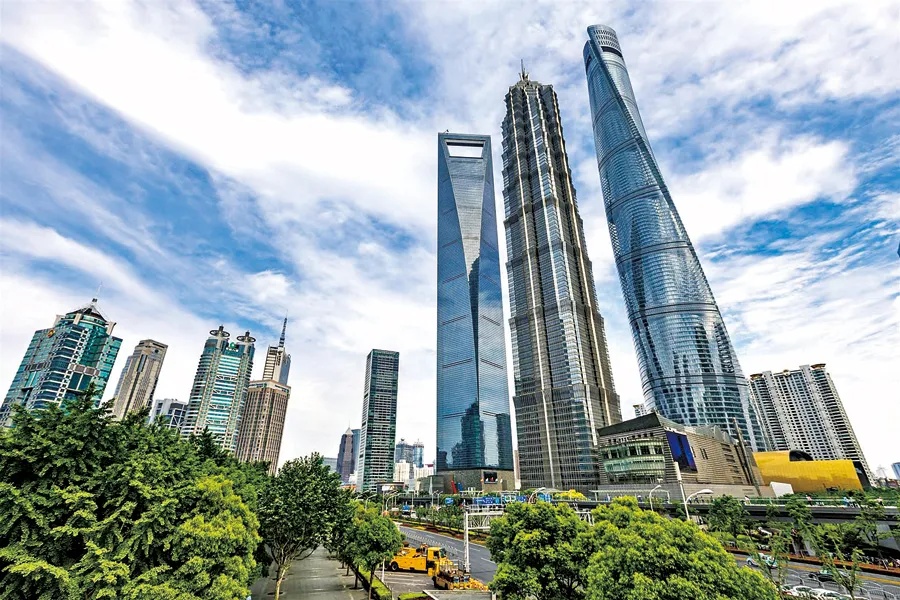
Shanghai Tower (Top of Shanghai Observatory)
Taxi & Street Navigation Help
师傅,请带我去浦东【上海中心大厦】(陆家嘴银城中路501号观光厅入口),谢谢!
Opening Hours & Best Time
08:30 - 22:00 (Last entry at 21:30)
💡 Pro Tip: Ascend at sunset to experience the world's fastest elevator (18m/s to the 118th floor in 55 seconds). If visibility is foggy or overcast, check live rooftop monitor cameras at the ticket desk before purchasing.
Accessibility & Luggage Lockers
Accessibility: ♿ Wheelchair & Stroller Friendly
Ultra-modern building with zero-barrier elevators, barrier-free restrooms, and wide corridors throughout.
🧳 Luggage Storage: Complimentary baggage check for observation deck ticket holders at Basement 1 entrance.
Nearby Iconic Landmarks & Walking Connections
Easily combine your itinerary with these neighboring architectural landmarks and cultural points of interest:
Skip On-Site Ticket Lines
Reserve verified instant mobile e-tickets using global Visa/Mastercard.
About Shanghai Tower (Top of Shanghai Observatory)
1. Architectural Superlatives: Piercing the Clouds at 632 Meters
Soaring 632 meters (2,073 feet) above the financial heart of Lujiazui, the Shanghai Tower is the tallest building in China and the third tallest architectural structure on the planet (surpassed only by Dubai’s Burj Khalifa and Malaysia’s Merdeka 118).
Designed by legendary American architectural firm Gensler alongside Chinese engineering consortia, the tower is structured as a vertical city: dividing its 128 occupiable floors into nine distinct vertical cylindrical zones, featuring sky lobbies, retail shopping, luxury hospitality (the world’s highest luxury hotel, J Hotel), and observation platforms.
2. The 120-Degree Twist: How Aerodynamics Conquered Typhoons
To the casual observer, the tower’s graceful spiraling form appears purely artistic. In reality, the 120-degree continuous twist is an engineering miracle designed to defeat catastrophic typhoon winds.
- The Problem: When gale-force typhoon winds strike a standard flat, rectangular skyscraper, dangerous vortex shedding creates immense harmonic sway that can shear structural joints.
- The Solution: Wind tunnel supercomputer testing revealed that twisting the building’s exterior curtain wall by approximately 1 degree per floor (accumulating to 120 degrees total) breaks up the vortex wind shedding.
- The Result: The twist reduced lateral wind loads by a staggering 24%, saving an estimated $58 million in structural steel while allowing the tower to withstand Category 5 typhoon gusts exceeding 200 km/h.
3. The “Eye of Shanghai” (125th Floor Super-Damper)
Suspended near the pinnacle of the skyscraper between the 125th and 126th floors sits a colossal, 1,000-ton steel pendulum: The Tuned Mass Damper (调谐质量阻尼器).
- World’s First Eddy-Current Damper: When colossal typhoons or seismic tremors shake the earth below, the pendulum sways in the exact opposite direction, absorbing up to 50% of the building’s dynamic sway.
- The Art of the Damper (“Eye of Shanghai”): Rather than hiding this industrial giant inside a dark machine room, engineers commissioned renowned Chinese artist Gao Meng to crown the 1,000-ton steel mass with an ethereal sculpted bronze figure titled “The Eye of Shanghai” (巅峰之眼), inspired by ancient jade artifacts (Cong).
- The High-Altitude Sound Experience: When visiting the 126th floor, an interactive 4D acoustic sound concert plays customized ambient music specifically tuned to the harmonic vibrations of the swaying damper.
4. The Giant Thermos Flask: Sustainable Green Architecture
The Shanghai Tower is wrapped in a double-skin glass curtain wall—literally functioning like an enormous household thermos vacuum flask.
The gap between the transparent outer triangular facade and the circular inner building creates massive vertical public sky atriums filled with living bamboo and weeping figs. This buffer zone naturally insulates the tower, slashing heating and cooling carbon emissions by over 21% and making it the world’s greenest supertall skyscraper (awarded LEED Platinum certification).